VEGETABLES
Compostable mulch that works in real fields — not just on paper.
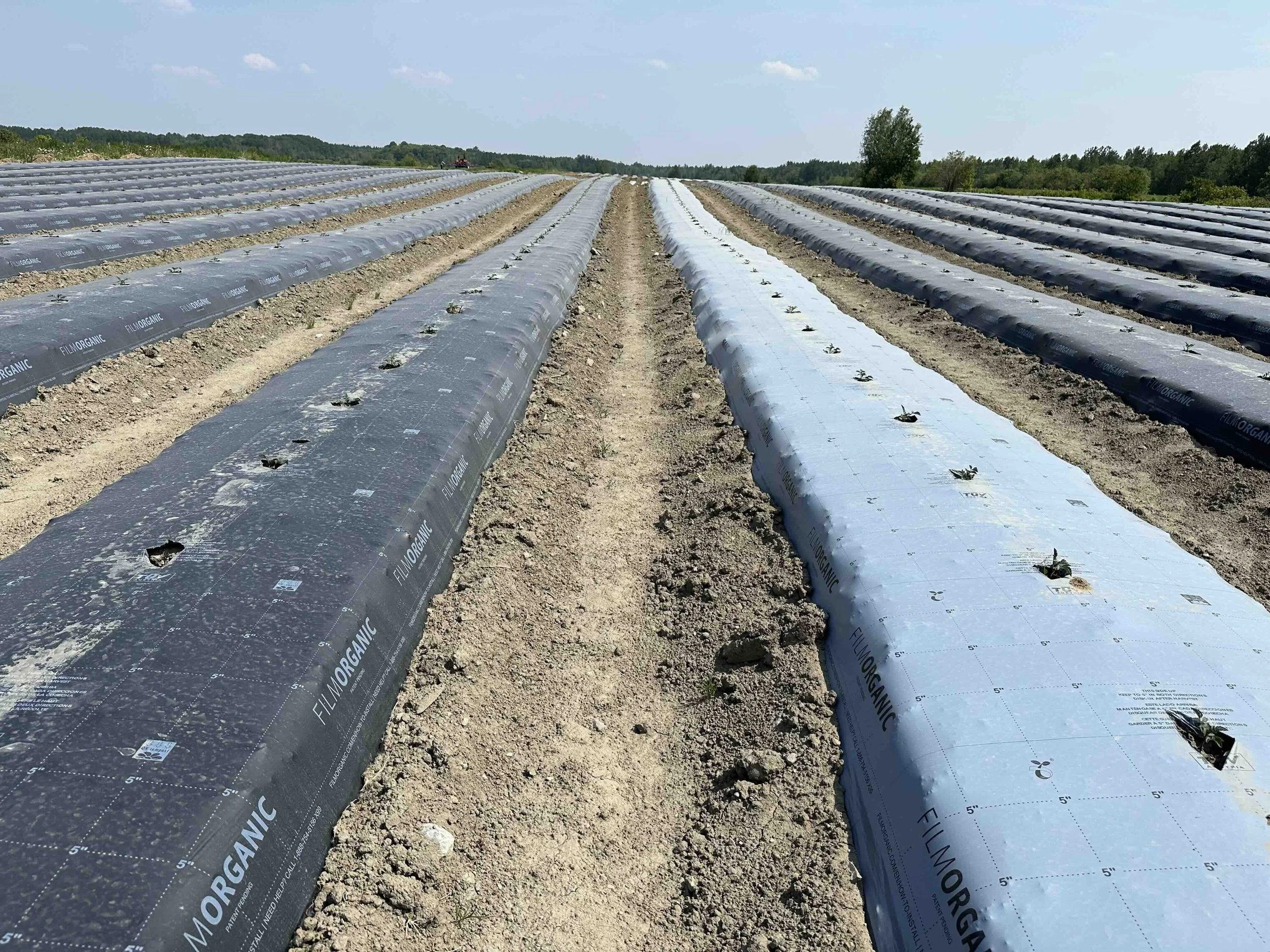
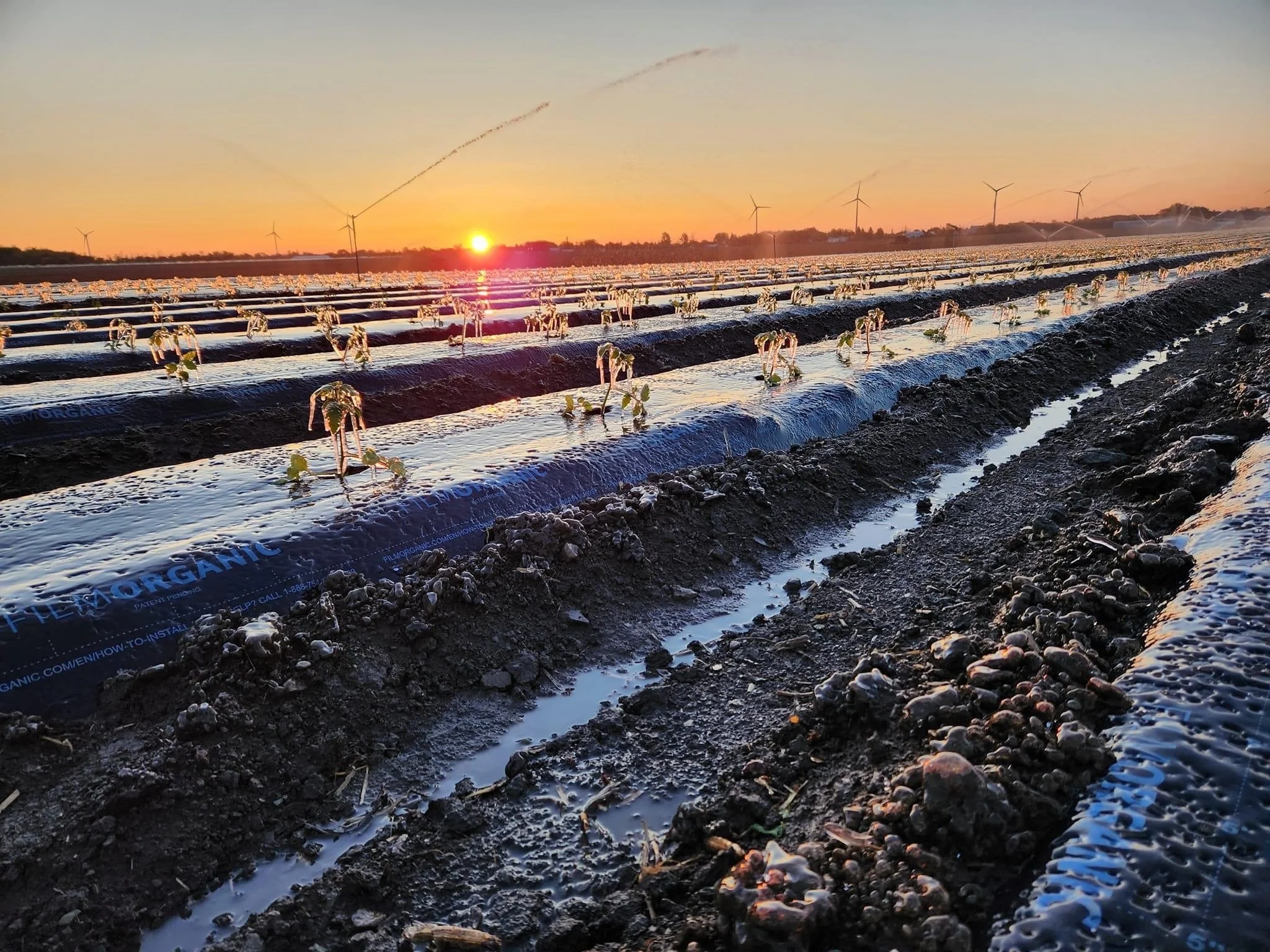
FilmOrganic mulch films are built for commercial vegetable growers who need results they can rely on —
season after season, field after field.
No end-of-season plastic pickup
No plastic fragments left in the soil
Save 2–3 weeks of labor per season
Answer a few quick questions — we’ll recommend the right film and reply within 24 hours.
For commercial growers using standard mulch-laying equipment.
You’ve tried everything. We get it.
If you’re still using polyethylene, oxo, or short compostables, there’s a reason.
Polyethylene works — but leaves a plastic legacy behind.
Oxo breaks up — it doesn’t break down.
Most compostables fail when field conditions aren’t perfect.
FilmOrganic was built specifically for growers who already know the difference —
and want a compostable system that actually performs.
Typical vegetable systems we support
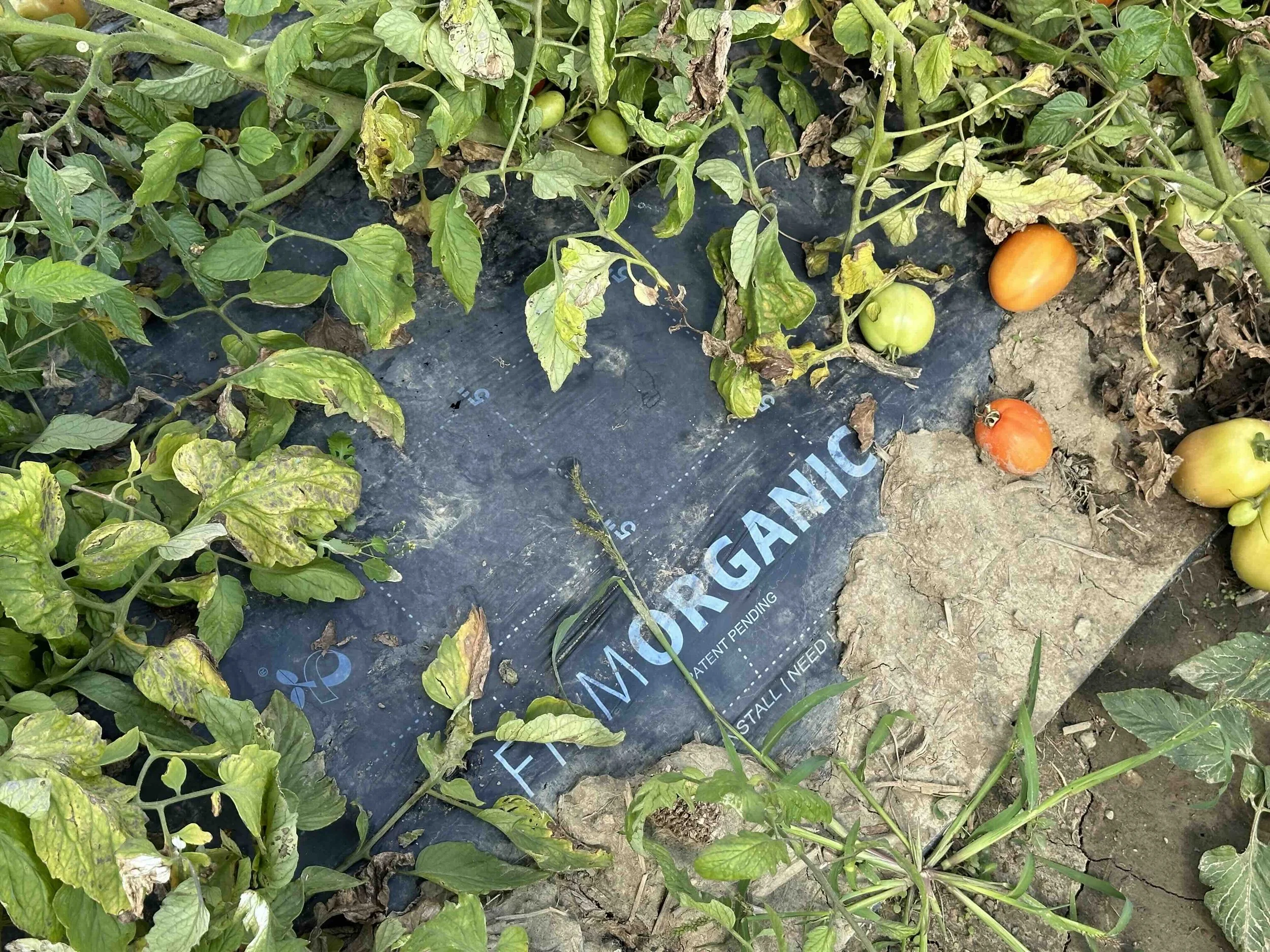
Tomatoes (including Roma)
Peppers & eggplant
Cucurbits (melons, cucumbers, squash, pumpkins)
Garlic
Sweet potatoes
Specialty vegetable systems
If you grow vegetables commercially and use plastic mulch today, you’re in the right place.
Choose the right FilmOrganic vegetable system
BLACK #36 — The field-proven standard
Short-cycle crops. Predictable installs.
A solid entry point for growers transitioning away from plastic.
-
Thickness: 0.60 mil
Typical field life: up to 3 months
Seeding window: up to 15 days
Maximum bed height: 6"
Recommended use: short to mid-cycle vegetable crops
Install: standard mulch-laying equipment, normal tension
Available widths: 24" to 80"Pro tip: In clean, well-formed beds, #36 often performs beyond expectations — even on longer crops like tomatoes.
BLACK #58 — When fields push the limits
More forgiving in real-world conditions.
Designed for:
Higher beds
Rocky soils or corn residue
Variable setups and imperfect stretching
Extra thickness provides added tolerance where conditions aren’t ideal.
-
Thickness: 0.75 mil
Typical field life: up to 4-5 months
Seeding window: up to 20 days
Maximum bed height: 8"
Recommended use: short to mid-cycle vegetable crops in demanding conditions
Field conditions: higher beds, rocky soils, corn residue, uneven shaping
Install: standard mulch-laying equipment, allows higher tension
Available widths: 24" to 80"Pro tip: If you’re unsure how clean or consistent beds will be, #58 buys you tolerance without changing your setup.
BLACK #66 / CoolWhite #66 — Premium coated performance
Mid-length crops with cleaner surface performance.
Extended field life (up to 6 months)
Coated surface reduces fruit sticking
Integrated 5" × 5" gridlines for manual planting guidance
A favorite among growers who’ve been burned by short compostables.
-
Thickness: 0.60 mil (coated)
Typical field life: up to 6 months
Seeding window: up to 30 days
Maximum bed height: 6"
Surface: coated to reduce fruit sticking and surface degradation
Available colors: Black or CoolWhite (white/black)
Recommended use: mid to long-cycle vegetable crops
Install: standard mulch-laying equipment, normal tension
Available widths: 48", 54", 60" (true 59")Pro tip: #66 is often chosen by growers who’ve been disappointed by short compostables and want premium reliability without jumping to extended systems.
BLACK #88 / CoolWhite #88 — Premium extended performance
Built for long seasons and demanding decisions.
Designed for growers who expect one bed to carry more — longer cycles, tighter margins, and no room for surprises.
-
Thickness: 0.75 mil (coated)
Typical field life:
– up to 8 months for long-cycle vegetables and double-cropping
– up to 15 months in strawberry systems when paired with frost protection fabric
Seeding window: up to 45 days (ideal for single-pass installation)
Maximum bed height: 8"
Surface: coated finish for improved durability and surface performance
Available colors: Black or CoolWhite (white/black)
Recommended use: long-cycle vegetables, double-cropping, extended field applications
Install: standard mulch-laying equipment; moderate tension recommended
Available widths: 48", 54", 60" (true 59")Pro tip: The 45-day seeding window makes #88 a smart choice for growers who prefer to install mulch in one pass, then plant progressively as conditions allow. When paired with a frost protection fabric, #88 can reach extended field life in winter-over strawberry systems — growers should refer to the Strawberry section for full system details.
CLEAR FOR CORN — Early heat, fast emergence
Designed to capture early-season heat in cold soils.
CLEAR FOR CORN accelerates soil warming and emergence when every heat unit matters.
Used for:
early sweet corn markets, where getting ahead defines the price
northern grain corn, where limited heat and sunlight make emergence the limiting factor
When crops can’t wait for the weather, fields have to work harder.
-
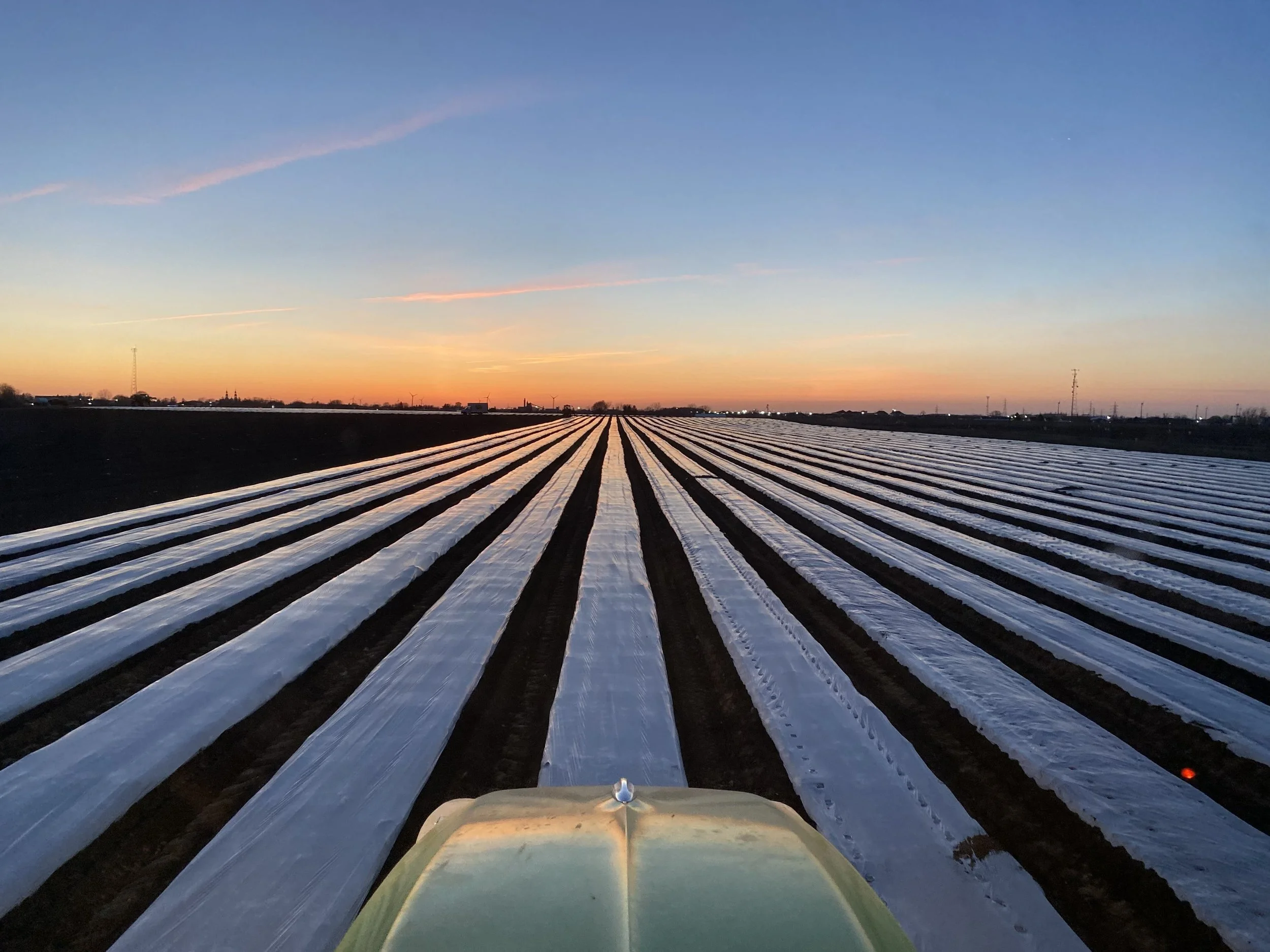
CLEAR #23 — Early sweet corn
Designed to capture early-season heat and accelerate emergence for early sweet corn markets where timing defines value.Thickness: 0.55 mil
Recommended widths: 24" to 60"
Use case: early sweet corn
Seeding window: early spring / cold soils
Install: standard mulch-laying equipment
SemFlow™ — Slit-film system for grain corn (maize)
Engineered slit-film system allowing corn to emerge naturally through the film — without manual cutting — in northern conditions where heat and sunlight are limited.Film design: pre-engineered slits for natural emergence
Recommended width: 54 1/4"
Use case: northern grain corn
Install: standard mulch-laying equipment
Shared system details
Primary benefit: accelerated soil warming
Weed control: requires herbicide or clean field strategy
End-of-season: disk/incorporate — no plastic removal
Pro tip: For sweet corn, CLEAR #23 is about speed. For grain corn, SemFlow™ is about engineered emergence when heat alone isn’t enough.
Why growers switch to FilmOrganic
Install once.
Harvest your crop.
Walk away at the end of the season.
No plastic removal.
No disposal costs.
No microplastic contamination left behind.
That’s where the real savings come from.
And that’s why FilmOrganic often costs less than plastic — when labor is accounted for.
-
FilmOrganic mulch films are compatible with standard mulch-laying equipment.
Successful installation depends on:
proper bed preparation
correct tension settings
selecting the right thickness for your field conditions
Each FilmOrganic series is designed to match real-world equipment and installation practices used by commercial growers.
We help match the right film to the right field — based on crop, bed shape, and operating conditions.
-
Short compostables don’t hold up.
That’s the definition.Most “biodegradable & compostable” mulch films on the market today are made primarily from starch-based materials. They are engineered to lose strength quickly — and growers feel it in the field.
These films are designed to break down fast.
They don’t tolerate stress, variability, or mistakes.That’s not a flaw. It’s the intent.
And it’s exactly why many growers keep shopping — or go back to polyethylene for critical applications.In real conditions, this typically means:
fragile films with limited tear resistance
tight installation constraints
narrow planting windows
little margin for wind, uneven beds, or weather swings
Short compostables can work — when everything goes right.
How FilmOrganic is different
FilmOrganic films are not starch-based — and still fully compostable.
This delivers two decisive advantages in real fields:
1. Better durability on the bed — without sacrificing compostability
FilmOrganic films stay intact when crops need protection, then fully compost in the soil before the next spring.You get control during the season — not surprises.
2. WYSIWYG installation — ready to plant immediately
What you see at installation is what you plant into.
No waiting for the film to tighten, settle, or cling overnight.FilmOrganic films also forgive more during installation, making them:
easier to lay in spring winds
more tolerant of real-world tension and bed variation
better suited to commercial-scale operations
Short compostables prioritize fast breakdown.
FilmOrganic prioritizes field performance first — then compostability, on schedule. -
Polyethylene creates microplastics — mainly during removal.
When polyethylene mulch is pulled from the beds, the process is abrasive:
soil friction
buried edges
tearing under tension
This abrasion generates microplastics that remain in the soil.
Most of the visible plastic is removed — what stays behind is plastic residue you don’t see, and that does not biodegrade.Oxo-degradable films: microplastics and macroplastics
Oxo-degradable films are still 100% polyethylene, engineered to fragment under UV exposure.
What happens in the field:
exposed areas break into fragments
nothing is collected at the end of the season
Once the field is disked, the buried portion:
does not see sunlight
does not degrade
remains intact in the soil
Over time, growers end up with:
microplastics from surface fragmentation
macroplastic pieces resurfacing year after year
plastic getting caught in tillage teeth and equipment
Oxo-degradable mulch doesn’t disappear.
It redistributes plastic throughout the soil profile.Break up vs break down
Polyethylene → microplastics created mainly at removal
Oxo-degradable → microplastics and macroplastics left in the field
Neither biodegrades
They only break up.
What real break down looks like — FilmOrganic
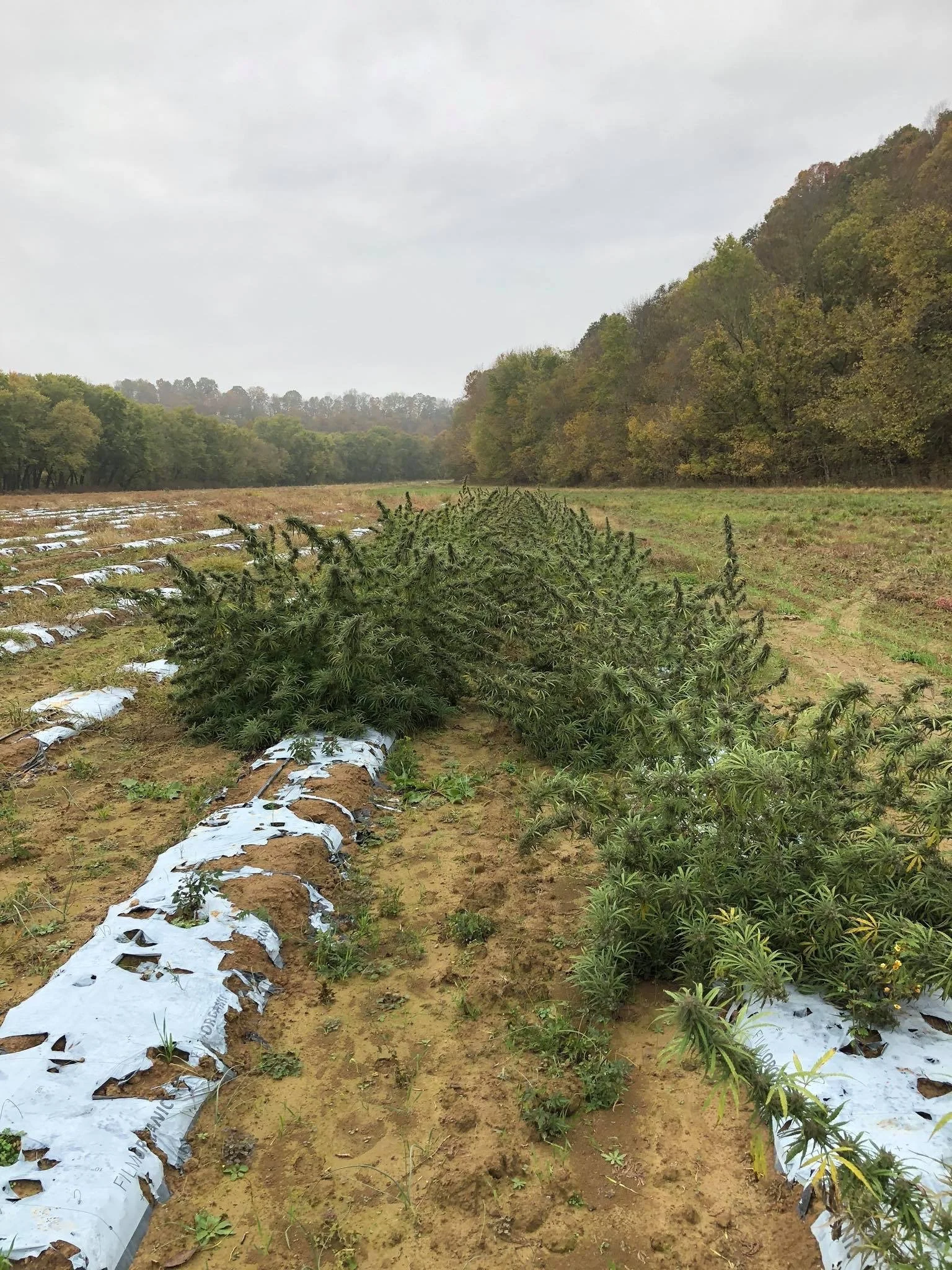
FilmOrganic mulch films are designed to fully break down in soil.
Whether it’s BLACK #36, BLACK #66, or BLACK #88, the outcome is the same:
the film performs during the crop cycle
then biodegrades in the soil
converting into water, CO₂, and biomass
leaving no plastic fragments behind
Thickness and field life do not change the end result.
The film disappears because it was engineered to do so.This isn’t magic. It’s material science.
FilmOrganic films are built to:
stay intact when crops need protection
then break down biologically — not mechanically
without creating microplastics or leaving plastic pieces to resurface
No residues.
No surprises next spring.
No plastic coming back through the teeth.Breaking up spreads plastic.
Breaking down removes it. -
Uncoated compostable films can stick to certain crops under humid conditions, creating quality and handling issues.
FilmOrganic #66 and #88 use a coated surface that:
Extends field life
Reduces sticking on crops like cantaloupe and Roma tomatoes
Maintains fruit quality without extra handling
If you’ve experienced sticking before — this is your fix.
-
Short answer: only if you ignore labor, tractor time, and reality.
Yes — compostable mulch can cost more per roll than polyethylene.
But polyethylene always comes with end-of-season work that nobody puts on the invoice.With plastic, fall cleanup means:
mowing the beds
pulling plastic
tractor passes, again and again
labor hours tied to equipment
loading, hauling, and container disposal
That’s diesel, tractor hours, wear and tear, maintenance — and you in the seat, doing work that doesn’t grow anything.
Most growers don’t count it properly because it’s spread out:
a few rows today
another pass tomorrow
a container when it’s full
But added together, plastic cleanup typically costs:
2–3 full weeks of labor
multiple tractor days
disposal or container fees that keep going up every year
time you could be using to prep fields, fix equipment, or simply be done with the season
With FilmOrganic:
install once
run the crop
disk it in and move on
No mowing.
No pulling.
No piles.
No containers.And this isn’t just about payroll.
You save those same 2–3 weeks.
Less seat time doing cleanup.
Less end-of-season grind.
More control over when the season actually ends.The real comparison isn’t:
plastic vs compostable (per roll)It’s:
cleanup system vs no-cleanup systemPlastic looks cheaper on paper.
But paper doesn’t burn diesel, rack up tractor hours, or keep you in the seat when the season should be over.Compostable costs less where it matters: in the field, over time.
Learn more (optional details)
Ready when you are.
We’ll help you choose the right FilmOrganic system based on your crop, climate, and equipment.
You decide the pace.
Prefer to talk it through?
📞 Call toll-free: 1-888-754-5156
No sales pitch. Just facts.
Answer a few quick questions — we’ll recommend the right film and reply within 24 hours.
Reply by email within 24h. Calls only if requested.